[PROJECT FILE] Gamedust / Unity / VR

Yupitergrad 2: The Lost Station

Level-building tools, an interactive station map, enemy behavior, and FMOD audio systems for a VR adventure built around exploration.

FOCUS
Senior Unity Developer
LATEST CONTRIBUTION
TECHNOLOGIES
Unity / C# / Editor tooling
PROJECT INDEX
03 / 10
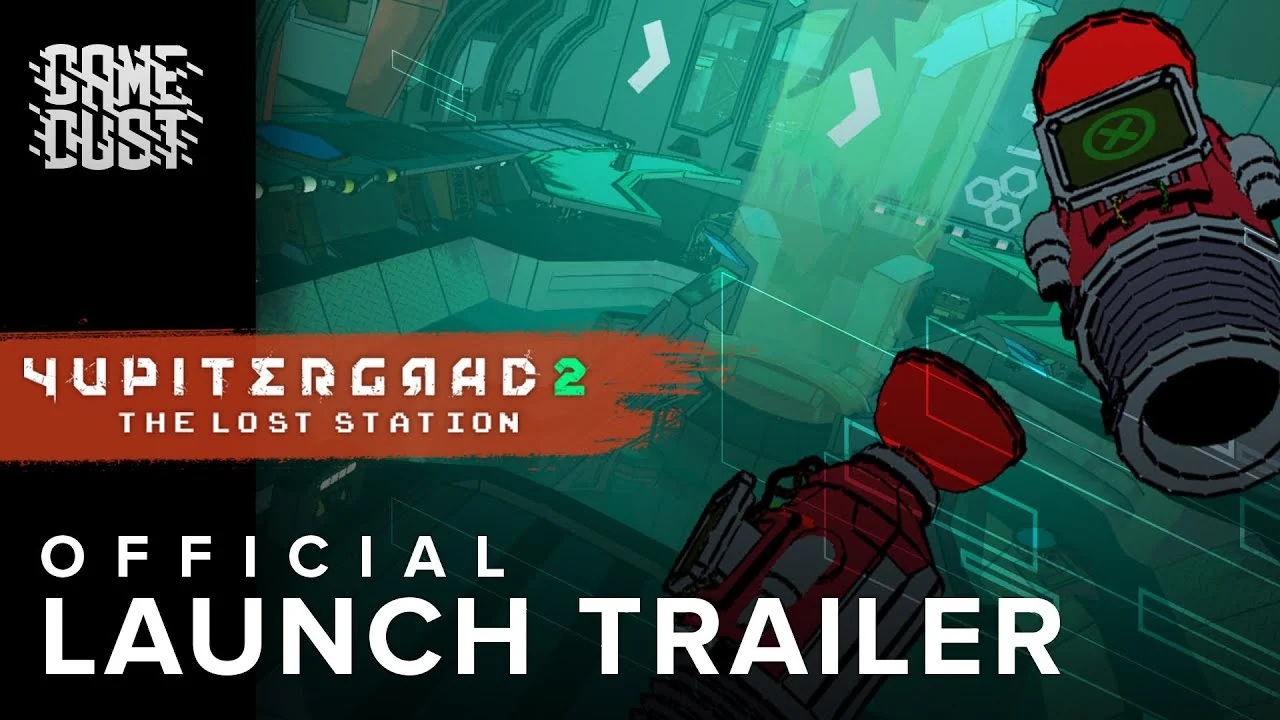
Yupitergrad 2 — official launch trailer — video preview
Yupitergrad 2 — official launch trailerWatch on YouTube ↗

[01] Project overview

The tools and systems behind a connected station.

Yupitergrad 2: The Lost Station expands the series into a VR Metroidvania: a connected space station with grappling traversal, robot encounters, environmental puzzles, and equipment that opens new routes.

As a Senior Unity Developer at Gamedust, I worked on the game from November 2021 to July 2023. My main focus was production tooling and map systems: helping build the station, generate its map, and make exploration readable in VR.

My contributions also included flying-enemy behavior, equipment animation integration, gameplay pause handling, and audio programming. In the separate FMOD project, I authored and organized audio events, configured mixing, and supported dialogue and music integration.

[02] Technical deep dive

// UNDER THE HOOD

From level authoring to navigation and feedback.

I developed Unity Editor tools for connecting modular level sections and preserving prop placement as layouts changed. Scene handles, visual previews, prefab support, and undo handling made these tools part of the level-production workflow. I also built map preview and batch-generation tools to inspect and rebuild map assets as the station evolved.

For the player-facing map, I worked on section discovery, neighboring areas, passage states, points of interest, and player position. I developed map movement, rotation, and recentering controls, and integrated map mode with gameplay pause and camera behavior. Mesh preparation and combining supported the map’s visual representation.

My audio work connected FMOD to game and level lifecycles, including bank loading, event playback, music selection, and dialogue callbacks. I adapted the integration around the project’s needs and worked on native callback data handling and cleanup. I also connected flying-enemy behavior-tree tasks with 3D navigation, target tracking, and firing conditions.

[03] Tech stack & skills

Tools and disciplines behind the project.

[04] Personal contribution

// 01

Modular level-building tools

Created and developed tools for connecting and aligning reusable level sections. Implemented scene handles, connection visualization, and prop attachment behavior so layout changes preserved the relationship between sections and their contents.

  • Unity Editor
  • EditorTool API
  • Scene handles
  • Modular level tooling
  • Spatial transforms
// 02

Map generation & asset preparation

Built and refined map-generation workflows using level content, simplified geometry, passage markers, and points of interest. Added batch rebaking with level selection and worked on mesh combining and outline integration for map assets.

  • Mesh processing
  • Batch asset generation
  • Editor automation
  • AssetDatabase
  • Rendering integration
// 03

Exploration & map state

Implemented and refined map-section detection, discovery, neighboring-section reveal, and passage visibility. Connected level relationships and runtime exploration state with the map’s visual feedback and points of interest.

  • 3D map systems
  • Graph relationships
  • Exploration state
  • Event-driven programming
  • ScriptableObjects
// 04

VR map controls

Developed map positioning, rotation, player indication, and recentering. Iterated on controller-based interaction and prototyped tracked-hand manipulation, then refined the map’s behavior across level transitions and camera changes.

  • VR input
  • 3D interaction
  • Coordinate spaces
  • Quaternion rotation
  • Interaction prototyping
// 05

Map preview & scene navigation

Created a map preview tool inside the Unity Editor, with visual level selection, scene navigation, and controls for inspecting different map parts. Refined its materials, visual cues, and behavior during editor and play-mode transitions.

  • Editor UI
  • Scene visualization
  • Debug tooling
  • Editor lifecycle
  • Material management
// 06

Prefab editing & placement utilities

Developed object-mirroring tools with previews and transform controls, added scale-rounding utilities, and improved undo behavior when reconnecting level sections and their props. Worked on tools across multiple open scenes.

  • Prefab workflows
  • Undo support
  • Transform tooling
  • Gizmos
  • Multi-scene editing
// 07

Flying-enemy behavior & navigation

Developed early flying-enemy behavior using NodeCanvas tasks and Mercuna 3D navigation. Worked on patrol routes, target tracking, aiming checks, firing behavior, physics-based rotation, and visual debugging of combat behavior.

  • Game AI
  • Behavior trees
  • NodeCanvas
  • Mercuna integration
  • 3D navigation
  • Physics control
// 08

Equipment animation & gameplay feedback

Refined grappling-tool animation and integrated weapon switching and firing with animation parameters and gameplay states. Connected equipment and environment interactions to sound feedback.

  • Animation integration
  • Animator parameters
  • State machines
  • Equipment systems
  • Gameplay feedback
// 09

FMOD integration & audio lifecycle

Adapted and extended FMOD integration into a reusable audio service. Worked on Addressables-backed bank loading, event emitters, audio parameters, pause behavior, and cleanup as gameplay and scenes changed.

  • FMOD integration
  • Addressables
  • Asynchronous asset loading
  • Audio lifecycle
  • C# services
// 10

Music selection & dialogue playback

Implemented music playback and selection driven by level entry, zones, combat, and game-state conditions. Developed FMOD dialogue playback and refined native callback handling, playback notifications, and resource cleanup.

  • Adaptive music
  • Dialogue systems
  • Native interop
  • Callback handling
  • Resource management
// 11

FMOD event authoring & mixing

Authored and refined sound events for equipment, machinery, water, and combat cues. Organized audio banks and mixer routing, adjusted reverb and event priorities, and configured music fades and a localized dialogue audio table.

  • FMOD Studio
  • Audio event authoring
  • Mixer routing
  • Reverb
  • Audio banks
  • Dialogue asset workflows
// 12

Pause integration & rendering maintenance

Coordinated map pause with physics, equipment, audio, and pooled gameplay objects. Refined camera settings and map visibility, combined map geometry, and maintained occlusion data and collision setup as levels changed.
  • Gameplay lifecycle
  • Dependency injection
  • Object pooling integration
  • Camera control
  • Occlusion culling
  • VR optimization

[05] Project links & references